Arsène Wenger's Arsenal: Relationist basis
Examining Wengerball to demonstrate some Relationism basis and tactical patterns.
Introduction
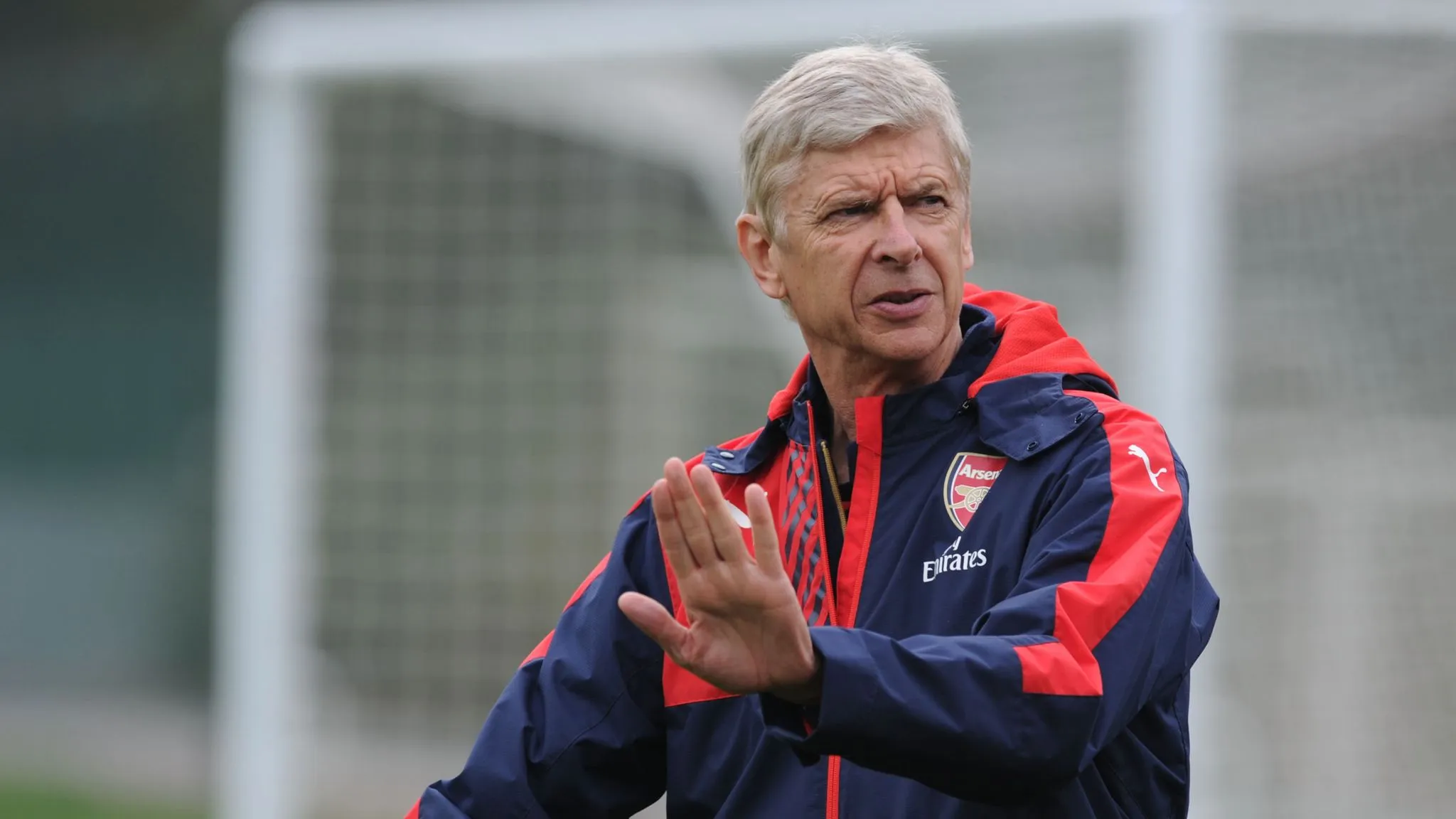
Arsène Wenger is one of the most iconic managers of this generation. His Arsenal teams are still well remembered because of their unique style and attacking flair. Today we will use them to demonstrate some Relationism basis and tactical patterns.
Overview
Despite being a modern coach, Arsène style is still highly influenced in the football from the 70s, 80s, 90s. It’s not a “pure relationist/jogo funcional idea”, but has a lot of relationist influence under the hood. His most iconic team was probably “The Invincibles”.
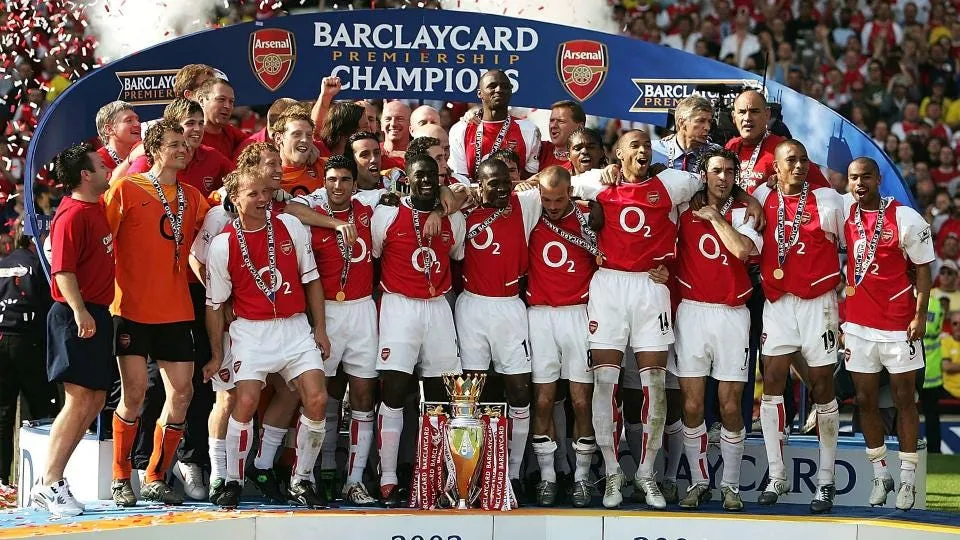
But we will not focus on that, in this analysis we will focus on the 2012-2013-2014 era. With players like Arteta, Theo, Cazorla, Ozil, Alexis, Ox, Ramsey, Gnabry, Wilshere, Rosicky, Giroud, etc… This era was not trophy heavy, but was very iconic in its own way.
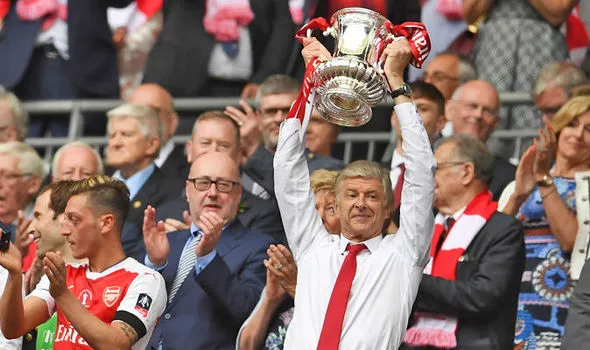
We will focus on this patterns that together make the basis of Relationist play:
- Tilting
- Toco y me voy
- Tabela
- Escadinha
- Corta luz
- The yo-yo
- Defensive diagonal
- Tilting
Is a concept where the players gather in close proximity around the ball carrier. This often takes place on the side of the pitch. To help with this Arsenal kept Minimum width, which is essentially a team lacking full width at any given vertical point on the pitch.
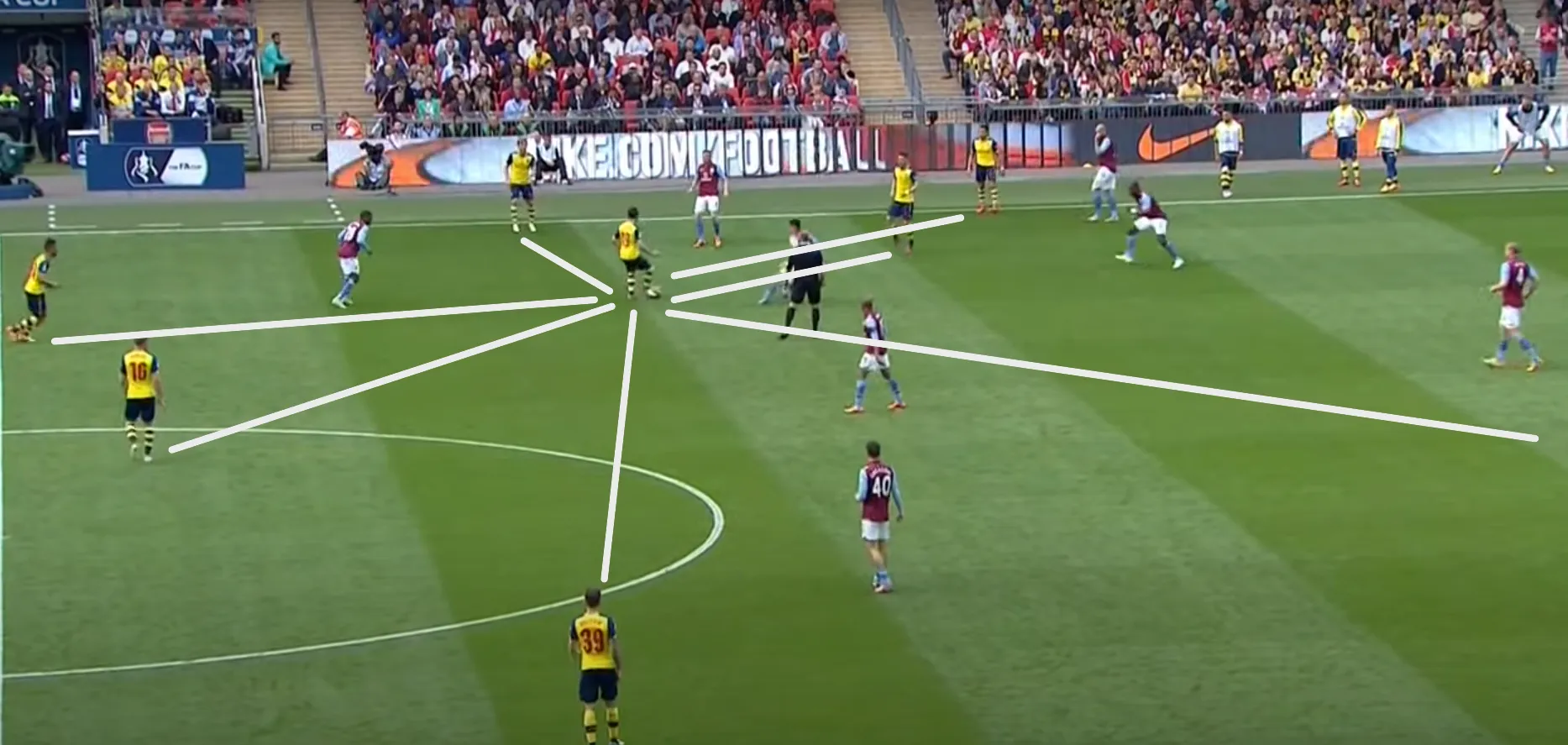
This helps combination play, players stay closer to each other and to the ball carrier, making progressive and movement based short passing options a lot easier.
- Toco y me voy
The “pass and move”, a basic and essential football principle, that generates dynamic superiority for the player receiving the ball. Here, Rosicky receives the ball in the left flank, combines and moves into space to receive again. Always flowing with the ball.
- Tabela
The “wall pass” or “give-and-go”, is a fundamental Relationist pattern that emphasizes quick, short passes between players to create space and maintain possession. As Jamie Hamilton says:
If toco y me voy is a foundational principle of Relationism then its beautiful twin must be the tabela. The pair are inseparable. Without a partner to dance with there can be no Relationism. It takes two to Tango.
In both examples, we see a combination of the tabela and the toco y me voy, they are related. They complement each other. “For the player who desires to toco y me voy there must always be a teammate available to tabela with.” And Arsenal used them a lot to beat the pressure.
- Escadinha
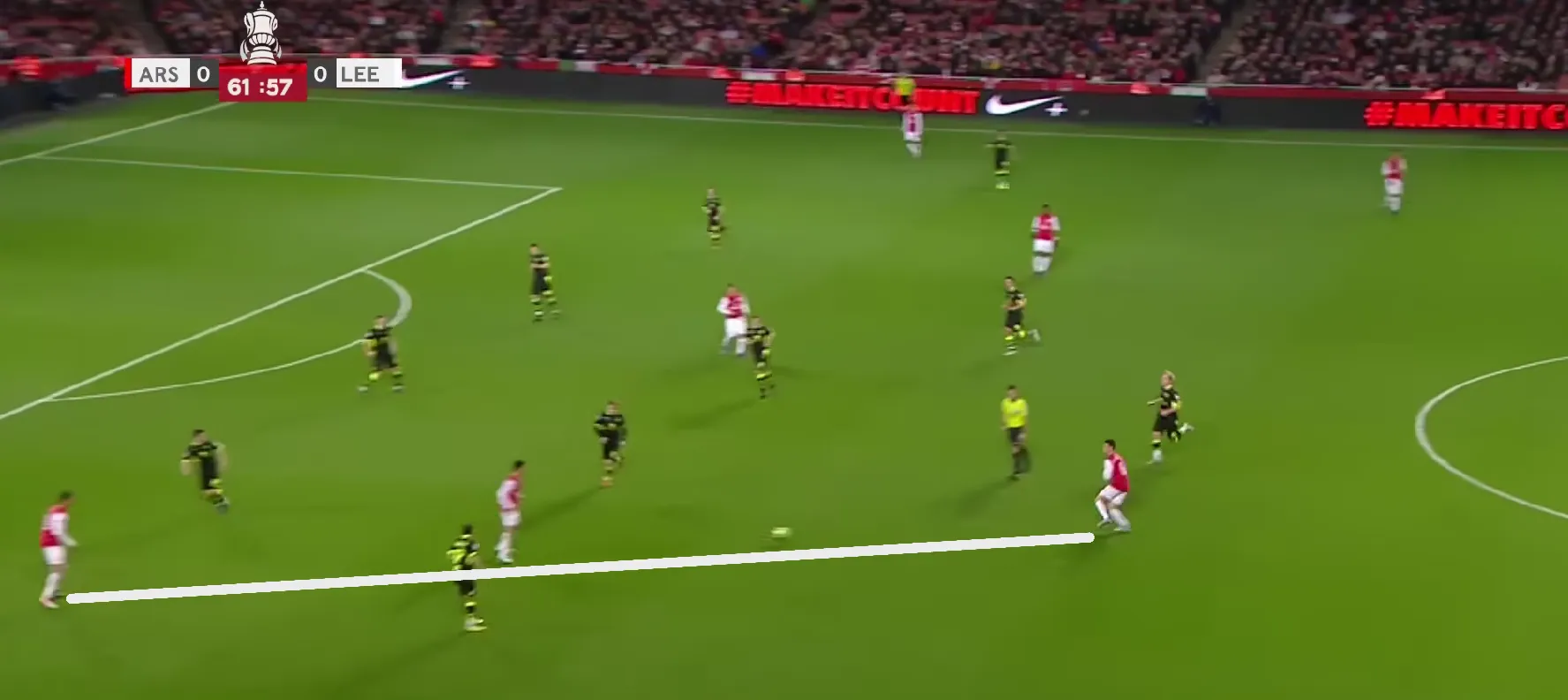
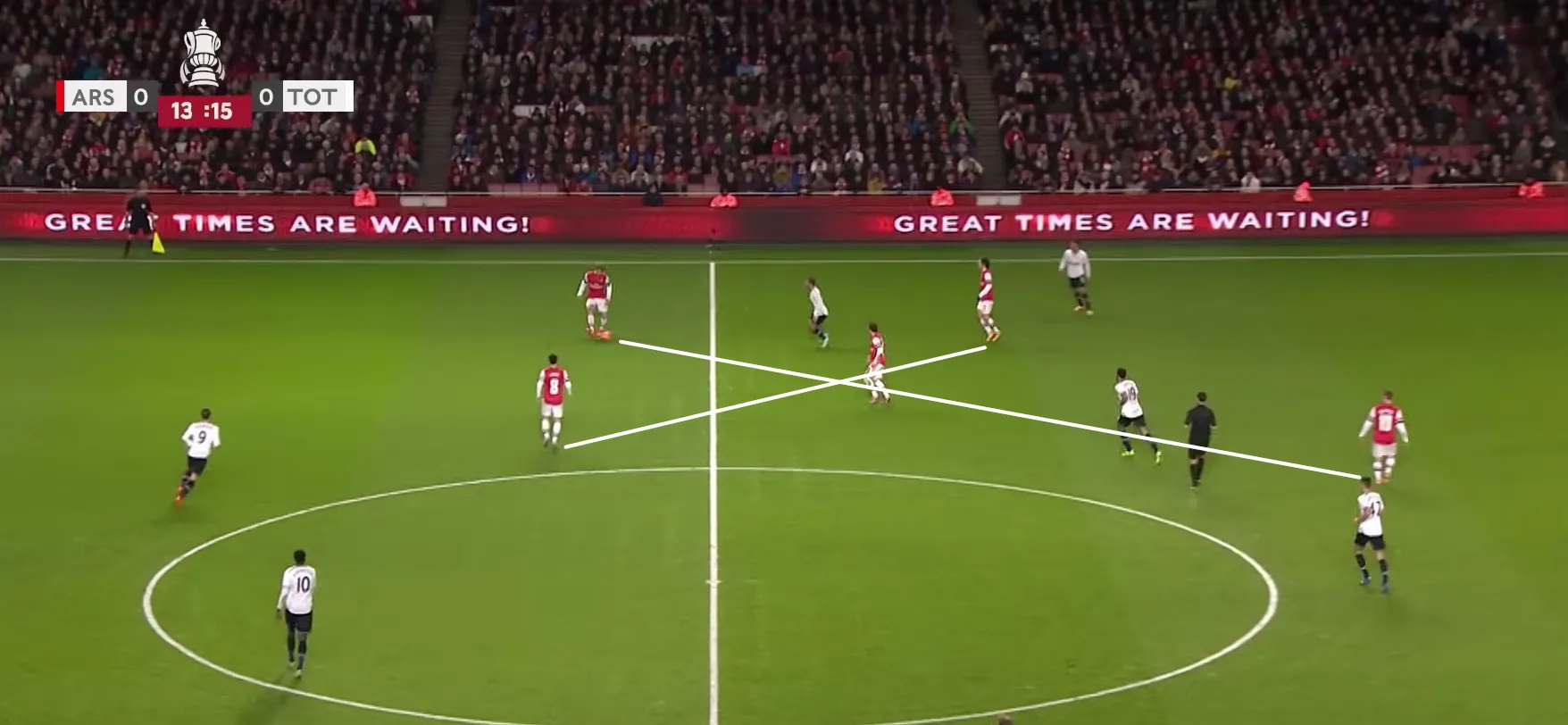
In English, the “staircase” or “stair” for short. “Our most common tool for moving upwards”. In Relationism these “microstructures” where players organise in diagonal lines are very important. “These diagonal lines are known as escadinhas.”
- Corta luz
Translating to English, “Light cut”. This is a very characteristic movement in Relationist play, and as we can see it is directly related to the escadinha structure. This movement is very similar to a “dummy”, where a player lets the ball go through or around his legs.
- The yo-yo
“So how do we maintain a tilt whilst simultaneously relieving pressure in the ball zone? The solution is the yo-yo.” At any time, the team can switch the play to the other side of the pitch, but prefers to maintain the ball in the strong side, where the tilt is.
Arsene’s Arsenal was not has fixed in this principle, it was a more “traditional” team in that sense, they used the switch a lot more than pure relational teams would use, but at that time, they used it a lot less than positional teams, and it was a lot more “hidden”.
- Defensive diagonal
This concept is important in Relationist rest defense and it is a by-product of tilting. “Simply put, the defensive diagonal is an inward movement performed by the opposite side fullback to mark the opponent’s ball-far winger or simply close the inside space.”
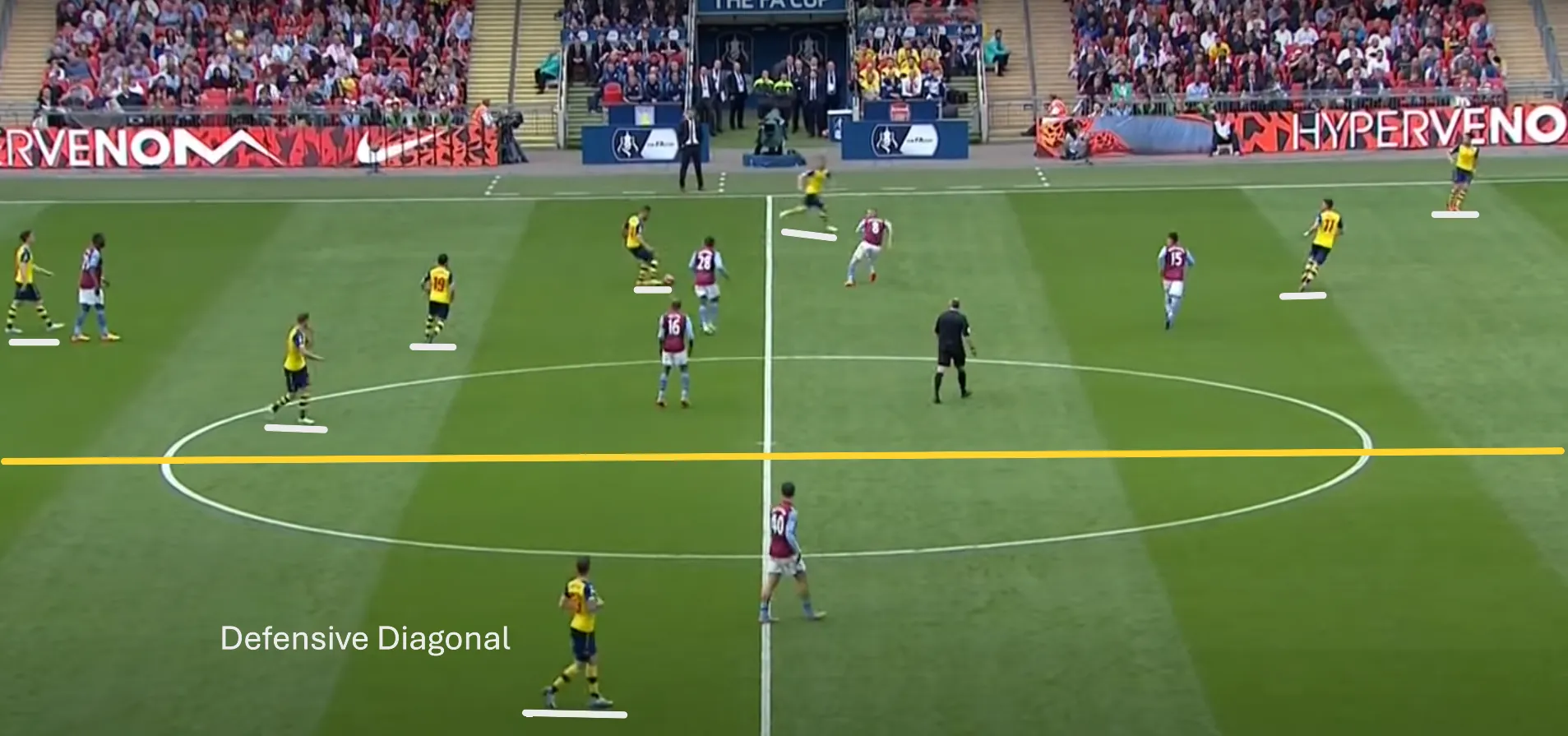
But despite being a defensive principle at first, it has a very big role in attacking play too. The inside or tilting movement of the forward or winger, often leaves open space on the opposite side for the full-back to attack. With a rapid switch, the full-back is in play.
When you apply these small concepts together, you get a very unique and expressive football team, even if the team still has a lot of positional principles like Arsene’s Arsenal used to have.
Link to @stirling_j (Jamie Hamilton) fantastic post on Medium explaining these concepts in more detail.
Original Post from Twitter:
Disclaimer
Disclaimer: Certain materials, including images, GIFs, videos, and text, are included in this content under the Fair Use doctrine (Section 107 of the Copyright Act 1976). These materials are used strictly for educational, research, and non-profit purposes. No copyright infringement is intended.
Football Tactical analysis. Image/Video/GIF: Used for the purposes of quotation, criticism, review, and parody under Article 17 of Directive (EU) 2019/790.
This blog includes copyrighted materials (such as images, GIFs, and video clips) used strictly for the purposes of quotation, criticism, review, and parody. This use is fully permitted under the statutory exceptions of Article 5(3) of Directive 2001/29/EC (InfoSoc) and Article 17(7) of Directive (EU) 2019/790.