Tottenham under Postecoglou - Vertical Possession
Some tactical notes about Tottenham under Ange Postecoglou and their Vertical Possession.
Introduction
Angelos “Ange” Postecoglou is an Australian-Greek football manager who made his name in English football managing Tottenham Hotspur, whom he led to the Europa League title, and a brief stint at Nottingham Forest. He has a very successful career, winning titles and trophies in Australia, Japan and Scotland before arriving in London.
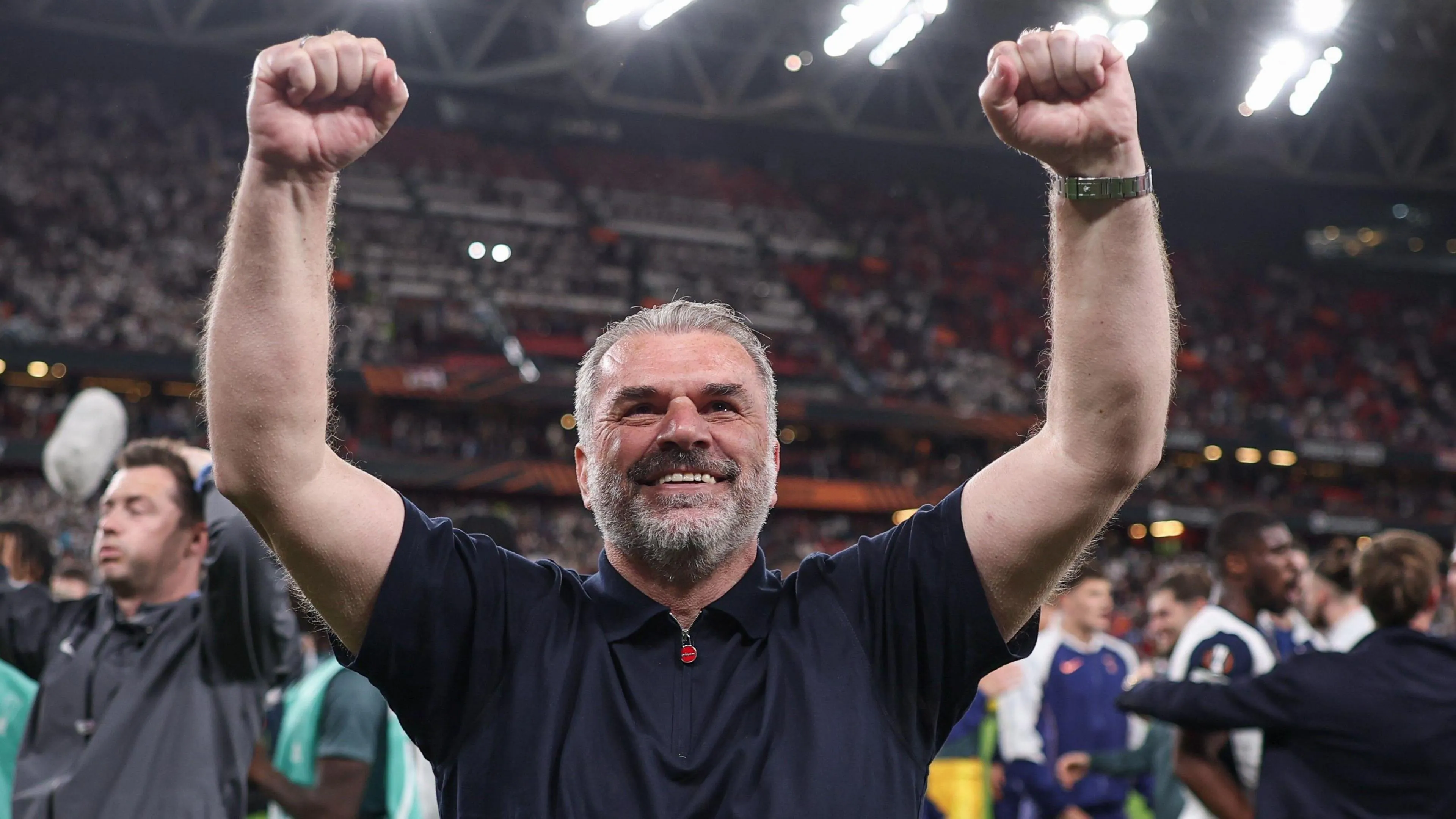
Postecoglou believes that football should be entertaining:
I like my teams to play football that all players want to play and all supporters want to watch.
And that forms the basis for how his teams play.
The System (and Structure)
Ange is a Positional coach and his teams follow a very strict structure, but they have a lot of movement and freedom to move around and change positions, it’s almost a “rigid-fluidity”.
They’ve all got freedom, we’re very structured, but hopefully it doesn’t look that way. We had [right-back] Pedro Porro as a centre-forward at one stage — that’s part of us hopefully being a really good, effective team and hard to stop.
His teams often start with a 4-3-3 or 4-2-3-1 on paper, which turns into a narrow 2-3-5 when they have the ball.
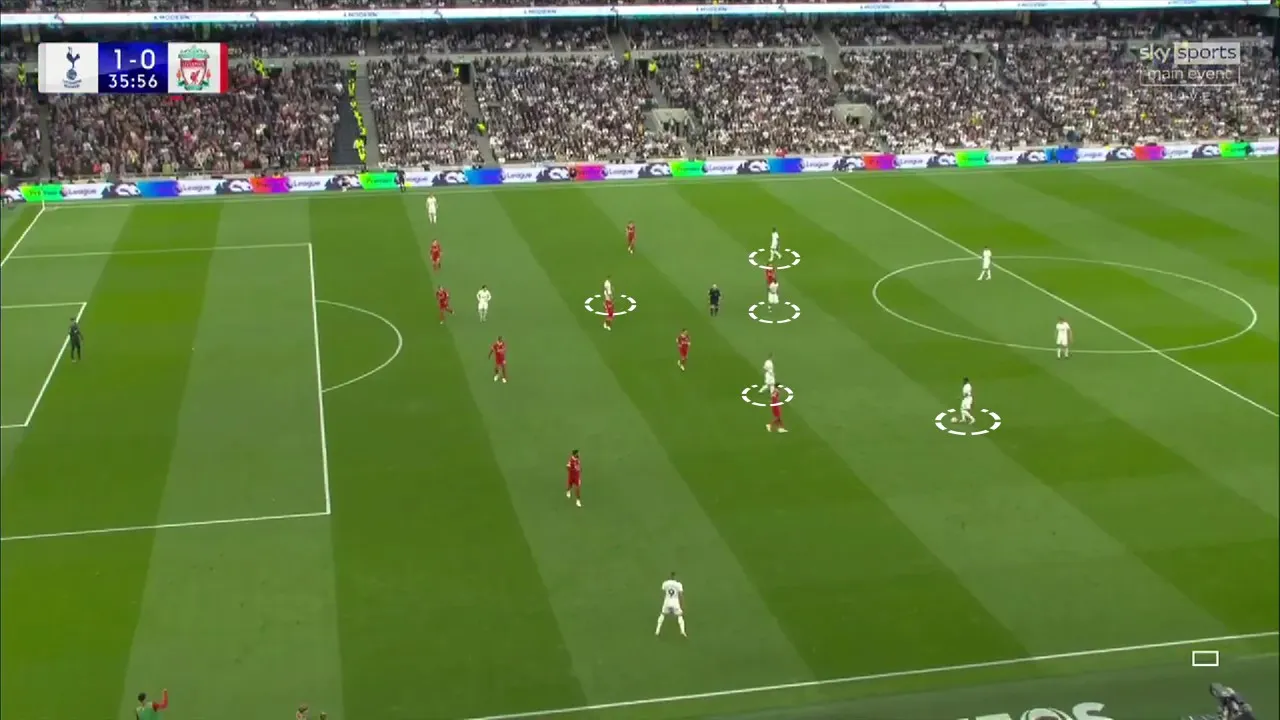
This 2-3-5 is very narrow because he uses inverted fullbacks in the middle of the pitch.
Note: As I discussed in the “Between Positional and Relational - Tilting” post, I would say that Ange’s Positional Attack is another form of the “Hybrid Attack”, with fullbacks and midfielders becoming the “floaters”, but still not being as free to roam because they always respect structure.
With a very offensive philosophy, often building up from the back, vertical play, lots of movement and a high press with a very high defensive line, his teams are as entertaining as it gets in modern football.
For me, this Tottenham team was the most fun team to watch in the Premier League at that time, especially in the 2023/24 season.
But let’s take a look on how this all works.
Inverted Fullbacks and Center Overload
- Buildup Phase:
In the buildup phase, they often involve the goalkeeper to gain a plus one advantage, and even in buildup his fullbacks stay very narrow. Unlike the majority of teams that use wide fullbacks to open up the field, Ange uses his fullbacks to achieve a vertical buildup.
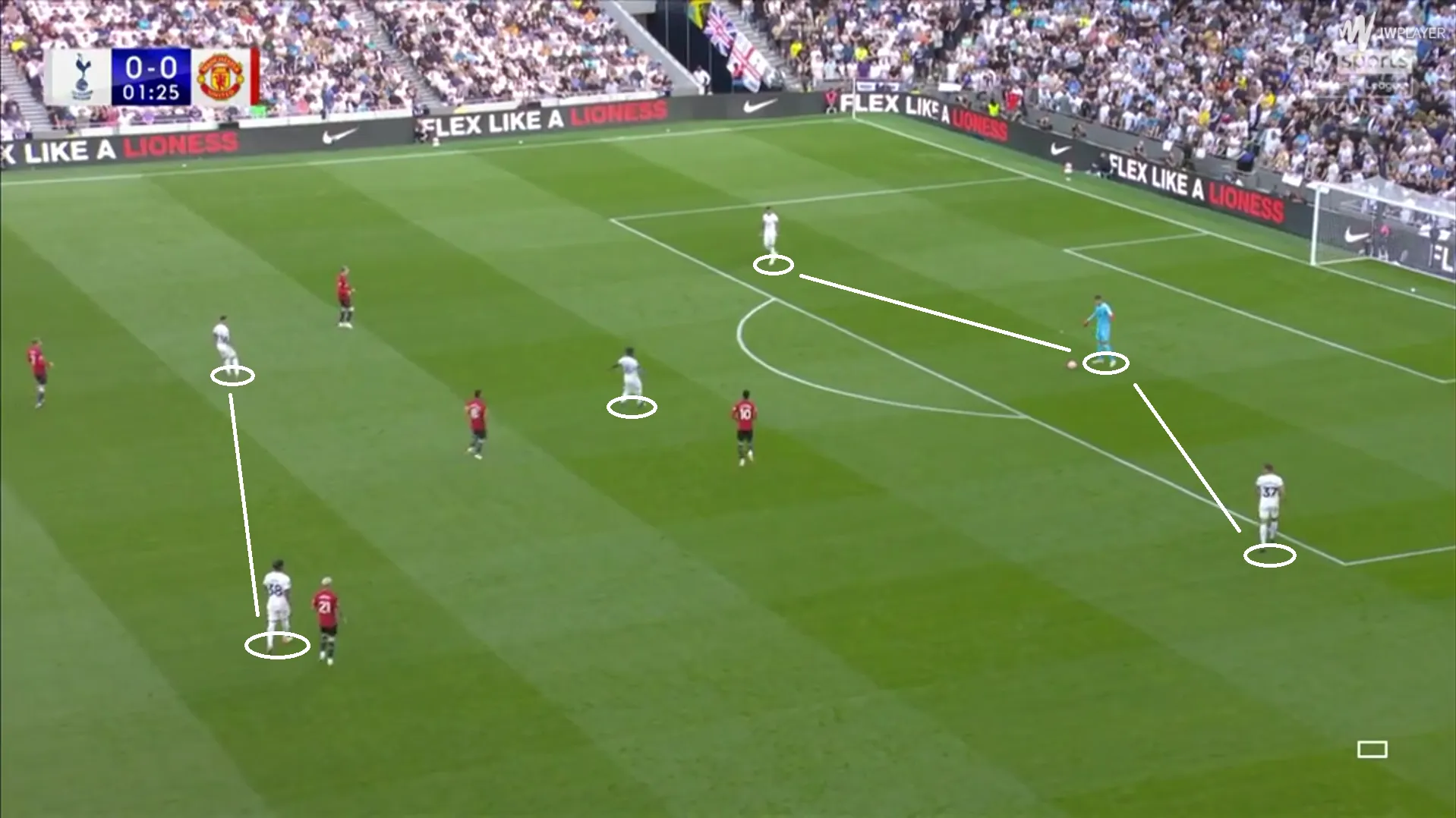
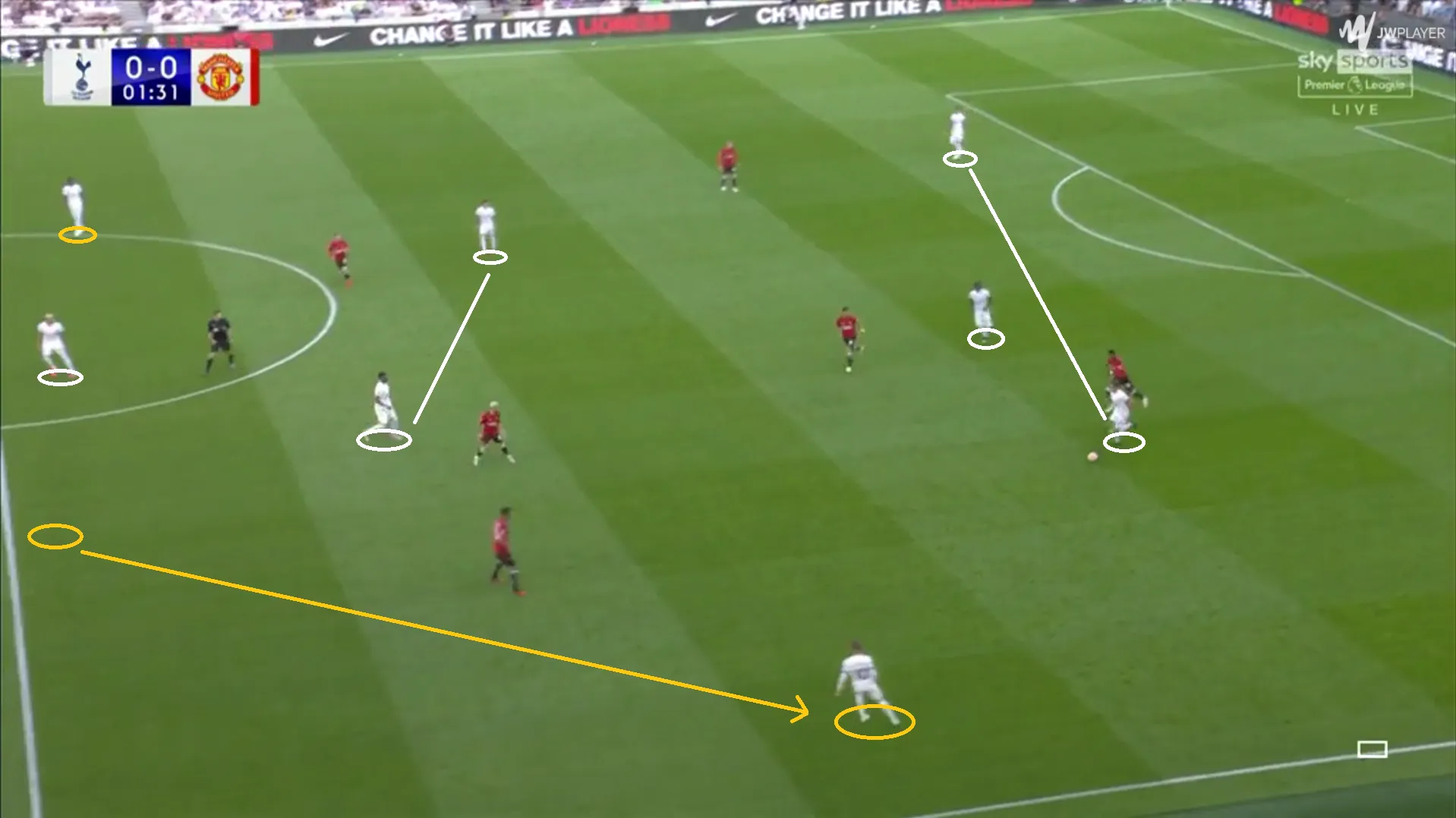
They use a narrow 2-1-2 structure, this creates a center overload and forms many triangles, helping the player with the ball to find a free man and making it very hard to press.
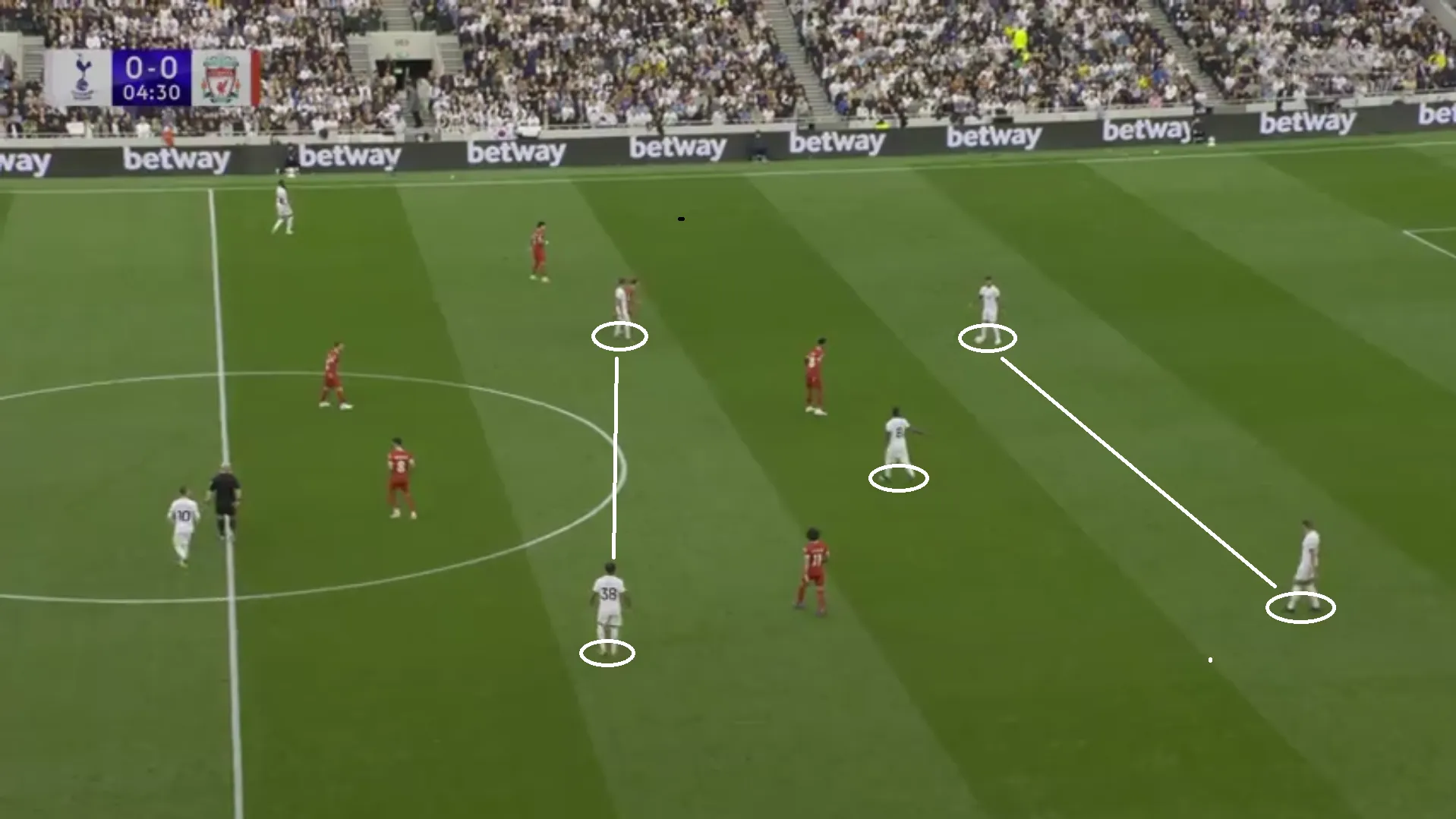
Because of the center overload and because the inverted fullbacks attract opposition wingers inside, one midfielder often drops to the side, where the space naturally appears, often dragging one midfielder and opening space in the middle or facilitating wide combinations by overloading one side of the pitch and playing vertically through that side.
- Creation Phase:
When the opponent closes that side, they use the other side to attack space. As an example before the goal against Chelsea, Maddison picks the ball on the left and gets it to the winger on the opposite side, and that pattern is very common for their chance creation.
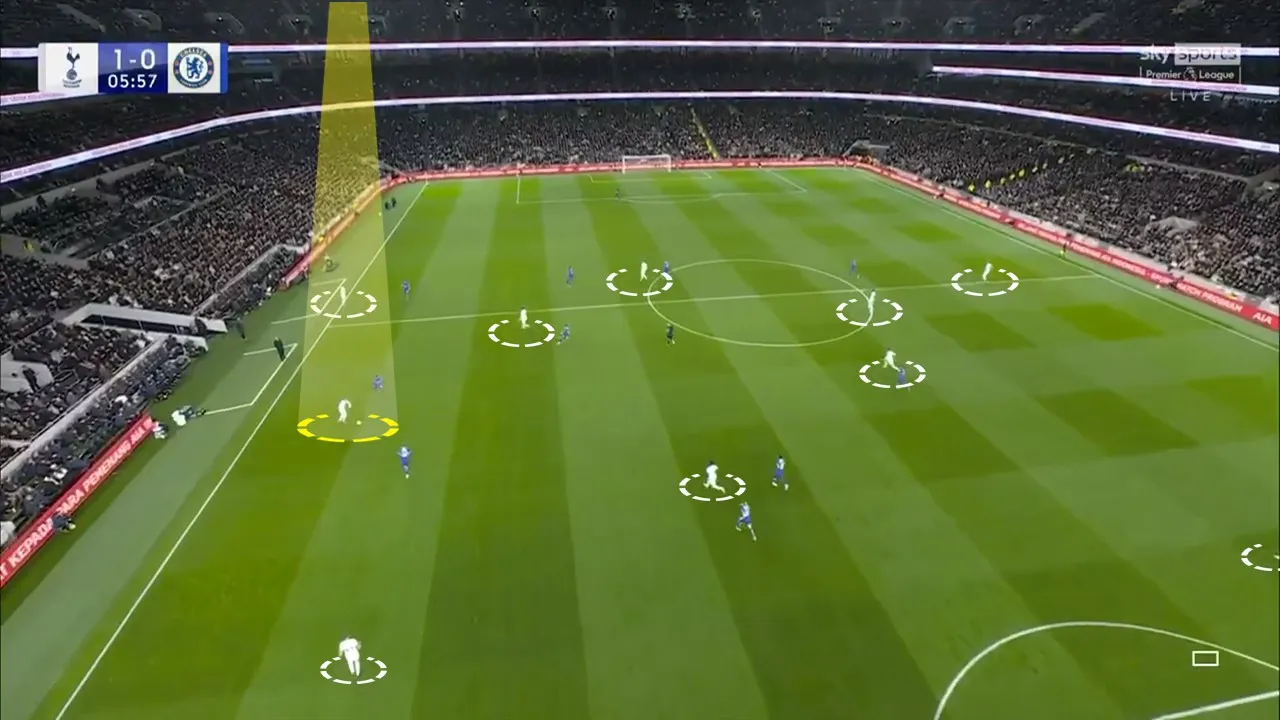
That 2-3-5 with the front three splitting wide and pinning the back line, along with inverted fullbacks and the midfielders, gets a lot of players inside, and that makes for many center combinations and a very entertaining football.
Playing through the middle
The key to those center combinations is the positioning of the fullbacks and midfielders overloading both half-spaces with two, or sometimes with the striker, or one of the players from the other half-space dropping there too, making the half-space overload even bigger, and those overloads make it easier for half-space combinations and to free players in the spaces between the lines.
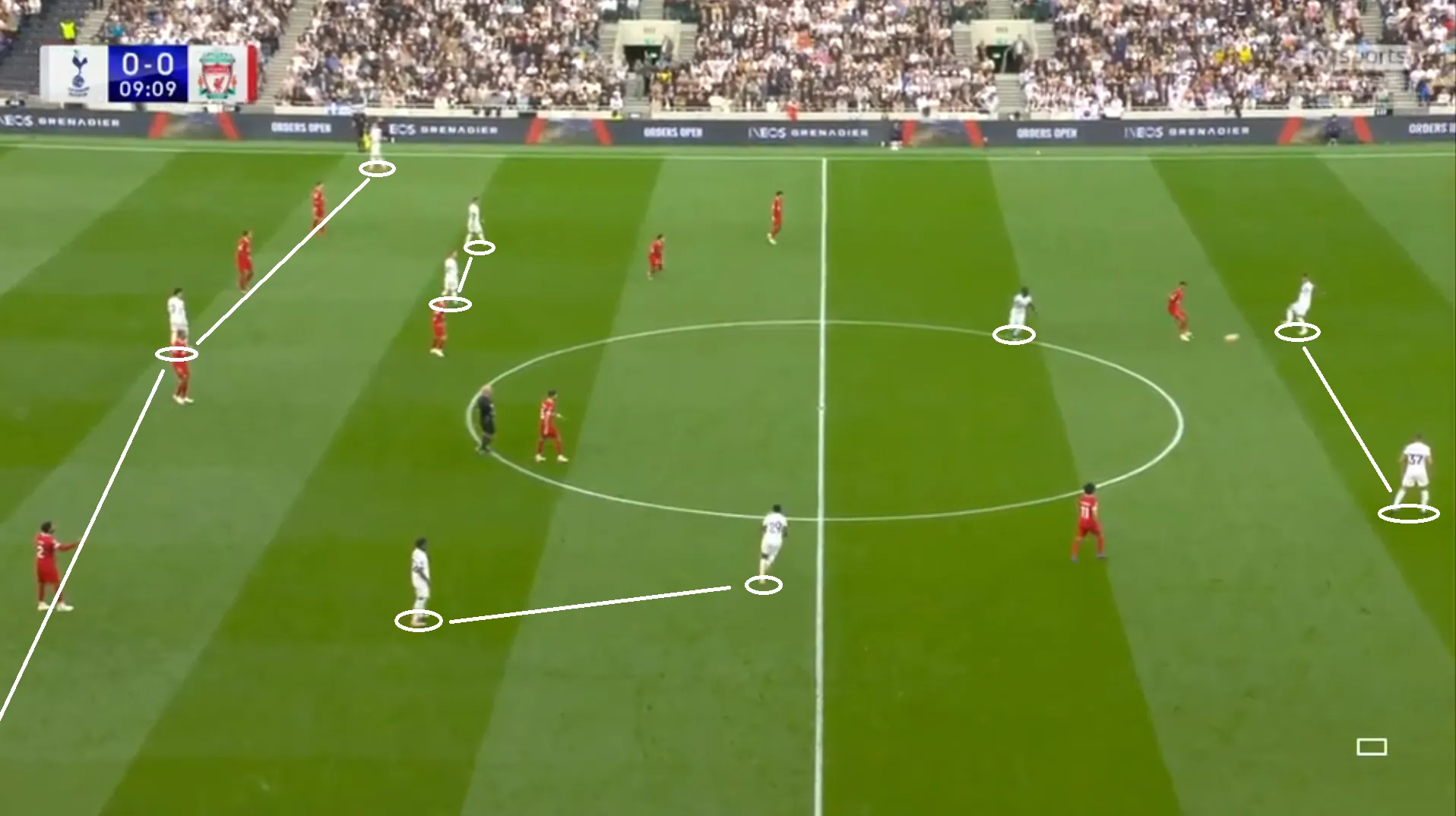
To play vertically and through the center, it is also very important that the players are comfortable making line-breaking passes, connecting the play with the players ahead. The players receiving the ball between the lines also have to be comfortable playing under pressure and combining with each other, often using frontal support to get their teammates receiving the ball facing the goal.
Off-the-ball movement
If you watched this Tottenham side, the first thing you would notice is the amount of movement and fluidity they have, always keeping structure in mind. However, they rotate and move all over the place without the ball.
As Ange said:
A rigid structure is very fluid because guys understand as long as there’s movement out there, they’re looking for spaces and other guys are filling the spaces they leave, then it doesn’t really matter where they pop up or where they go. But there is a discipline within that; it’s not about running anywhere, it’s about going into the areas we work on constantly, and if it looks fluid, that makes us harder to stop.
The following video shows exactly that. Look at how much movement and positional rotations they make without the ball even being played:
In the following example, it is possible to see the two fullbacks agressive positioning on the last line where the two attacking midfielders would be, Bissouma and Sarr deeper, in the positions of the inverted full-backs, and Maddison, who is the engine of this team, taking Bissouma’s center position. This is the result of the movement that the team generates throughout the games through constant rotations, positional switches, and movements in space. Combined with the greatly reduced distance between players and lack of width, they create short vertical and diagonal passing lines that allow the penetration of the opponent’s block.
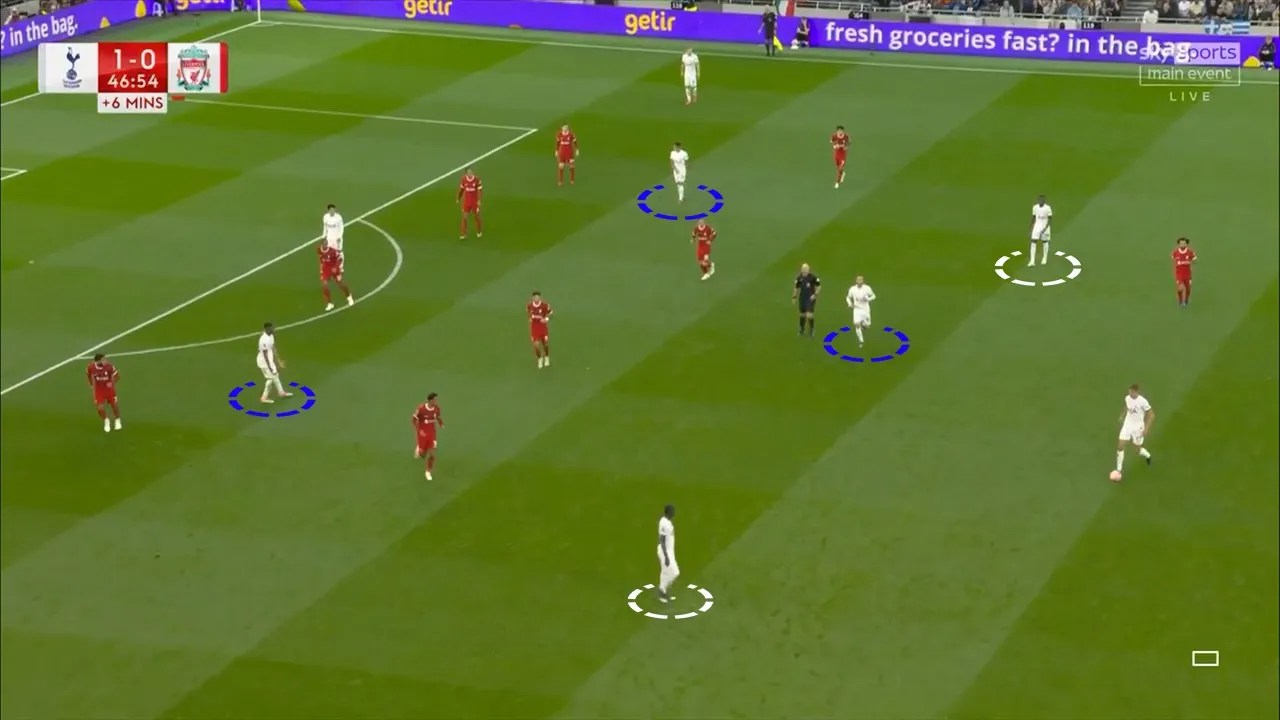
A very common dynamic they have is when the winger receives the ball out wide, the player inside (in the half-space) attacks depth making an underlap.
Note: In this way, I would say Tottenham was a positional team without playing a very strict positional play, at least not the more “orthodox” idea of positional play.
Vertical Attack
- Finising Phase:
When the center is congested, they often attack space on the wings, with vertical runs from the wingers in space or isolating them in a 1v1 situation.
As we saw before, they often look to attract the opponent to one side or to the center and they often try end the play on the far side, with a winger in a 1v1 situation or a winger, midfielder, or fullback in space, on the wings or in the center with half-space attacks.
Here are great examples of this in practice:
And these combinations are not just random movements and combination plays, they are all well-coached.
Celtic - Extra
His Celtic side (and also Yokohama Marinos in Japan) was also great to watch, with all of the same principles present too, the same structure, inverted fullbacks and those center overloads.
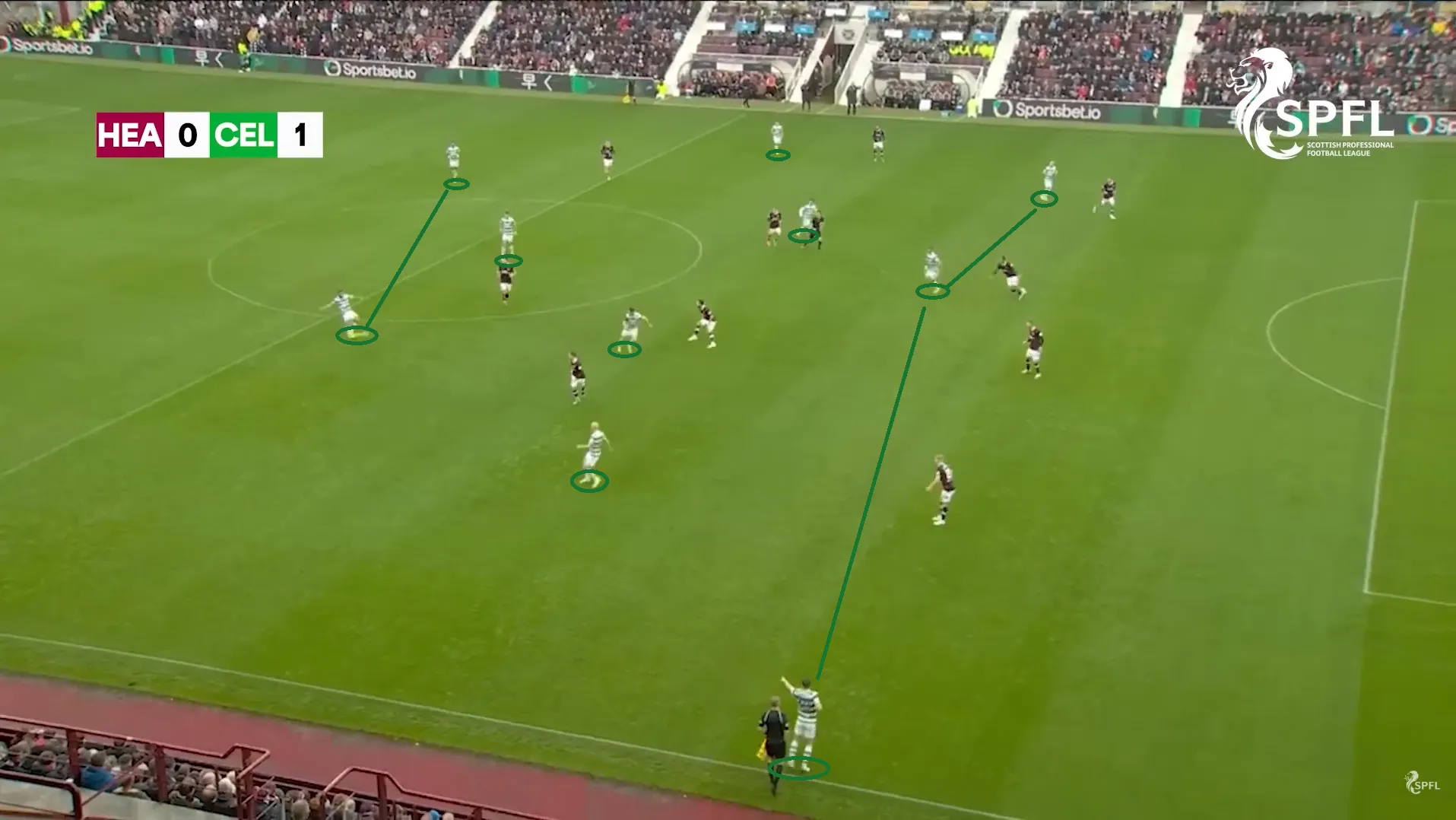
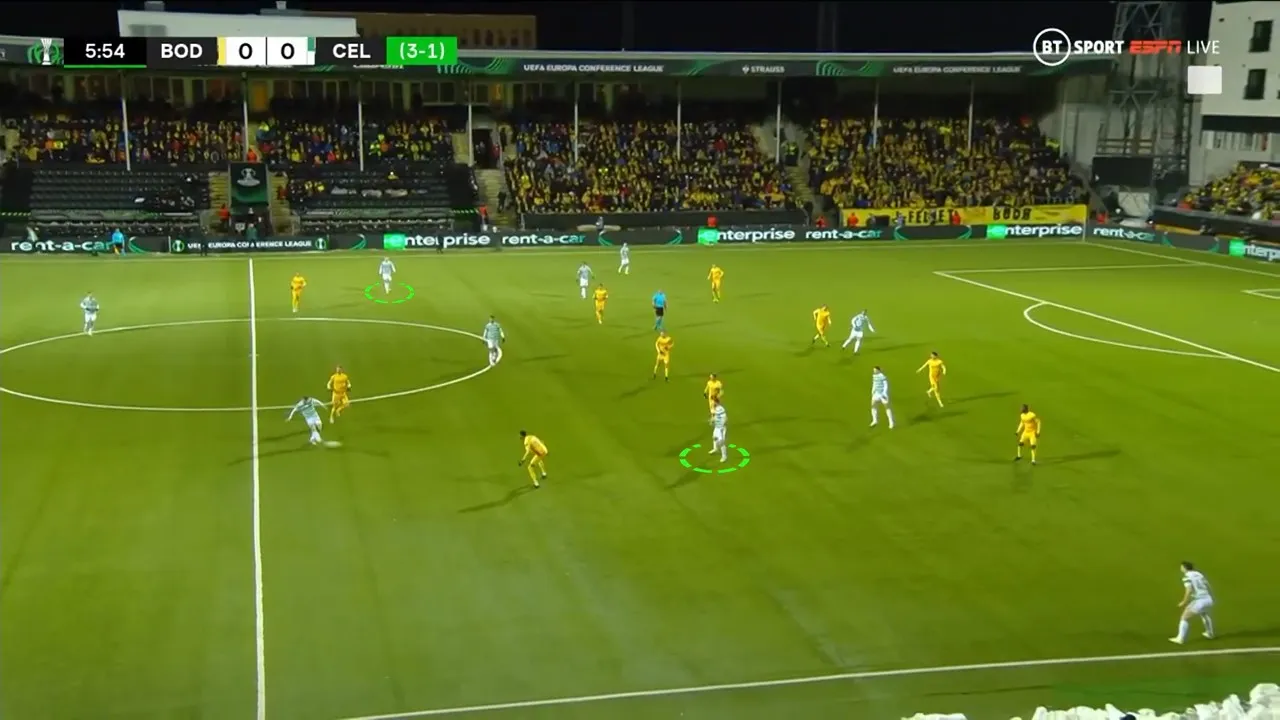
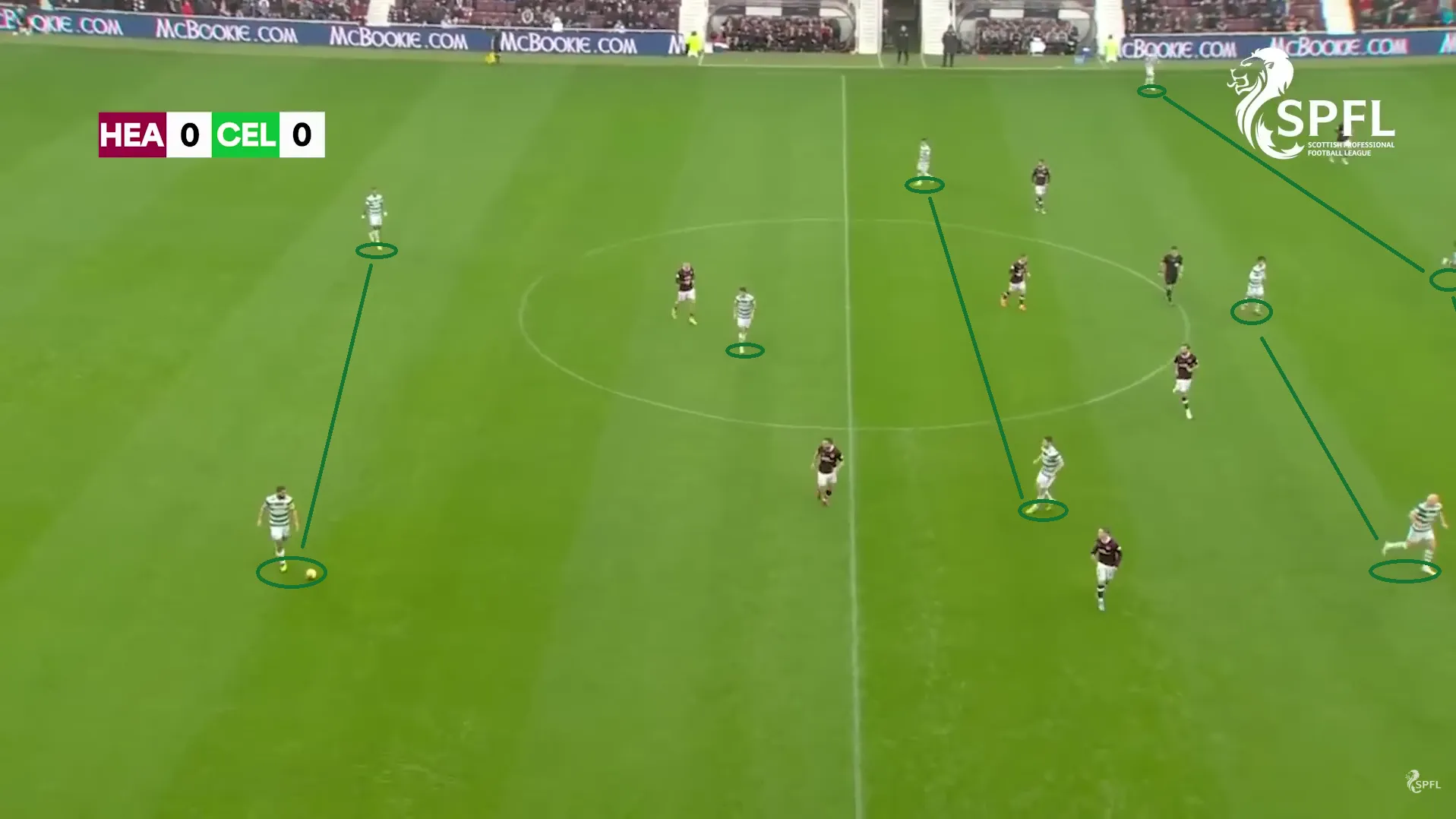
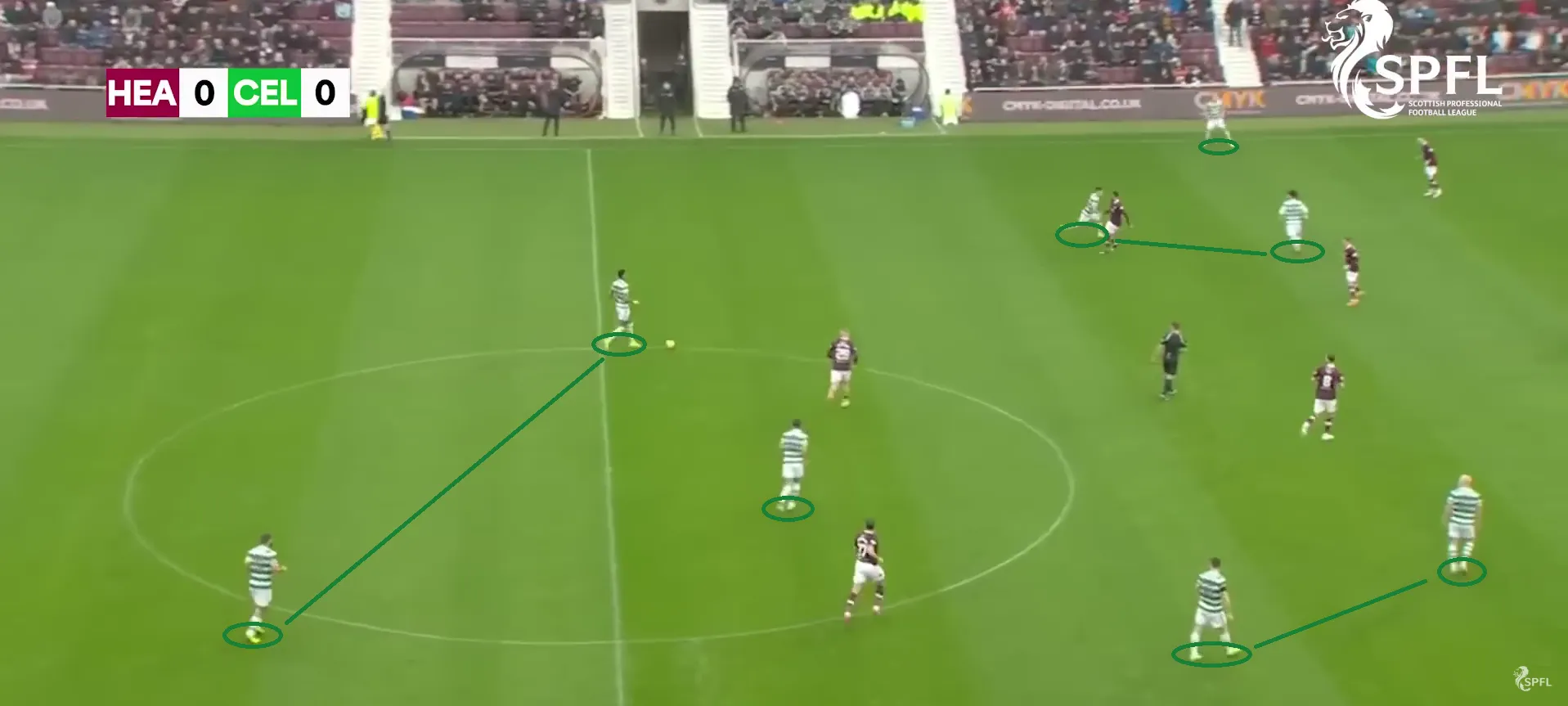
Just take a look at these great center combinations:
Note: I would say the biggest difference between his Celtic side and his Tottenham side might be the amount of movement of the ball, Tottenham really hits differently in that aspect.
Disclaimer
Disclaimer: Certain materials, including images, GIFs, videos, and text, are included in this content under the Fair Use doctrine (Section 107 of the Copyright Act 1976). These materials are used strictly for educational, research, and non-profit purposes. No copyright infringement is intended.
Football Tactical analysis. Image/Video/GIF: Used for the purposes of quotation, criticism, review, and parody under Article 17 of Directive (EU) 2019/790.
This blog includes copyrighted materials (such as images, GIFs, and video clips) used strictly for the purposes of quotation, criticism, review, and parody. This use is fully permitted under the statutory exceptions of Article 5(3) of Directive 2001/29/EC (InfoSoc) and Article 17(7) of Directive (EU) 2019/790.